Indicators
Technical indicators explained: MACD, RSI, Bollinger Bands, Stochastic, and more.
Bollinger Bands
Bollinger BandsĀ® is an indicator that measures market volatility. Bollinger BandsĀ® was invented by the technical analyst John Bollinger in the 1980s, and he obtained trademark protection for the indicator in 2011. Bollinger BandsĀ® consists of three lines: A middle line and an upper and lower line, o
COT Indicator
The COT (Commitment of Traders) indicator is a powerful forex trading tool, surprisingly used only by a minority of traders. The indicator is based on the reports published by the Commodity Futures Trading Commission (CFTC) every Friday. The report from the CFTC can be used by traders to spot potent
COT Strategy
The CoT indicator is a useful tool for trading forex, which surprisingly is only used by a small number of traders. The indicator is based on the reports published by the Commodity Futures Trading Commission (CFTC) every Friday. The CFTC report can be used by traders to identify potential significan
Ichimoku Kinko Hyo
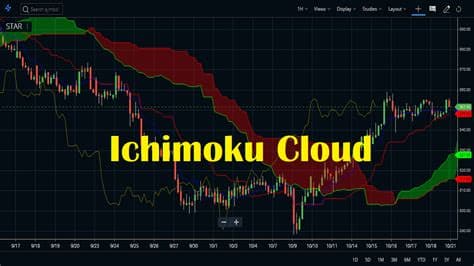
Ichimoku Kinko Hyo, also known as the Ichimoku Cloud, is a technical indicator used to measure momentum, identify the direction of the trend, and to get an overview of future support and resistance points. Ichimoku Kinko Hyo was developed by the Japanese Goichi Hosoda. It took him 20 years to⦠Conti
Keltner Channels
āKeltner Channelsā is an indicator that measures market volatility. The original Keltner Channels were described by trader Chester Keltner in a book from 1960. However, the indicator has since been modernized, so today it closely resembles the Bollinger BandsĀ© indicator, which is more well-known. Ke
MACD Indicator
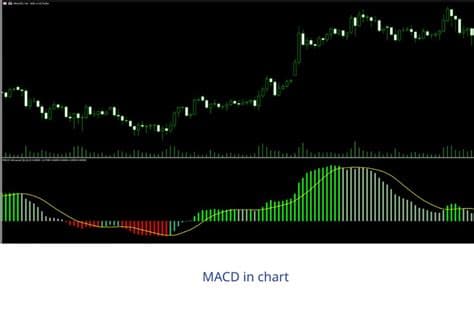
The MACD indicator is one of the most used indicators in understanding market development. The indicator is based on moving averages and their interrelationship. MACD is an abbreviation for Moving Average Convergence Divergence. The MACD indicator is based on three different time parameters, namely
Moving Average
Moving averages are one of the most fundamental tools in technical analysis. Among other uses, moving averages can be used to determine the trend in a market, whether it is upward, downward, or moving sideways. Looking at a moving average over the last 50 hours provides a long perspective for⦠Conti
Parabolic SAR
Parabolic SAR (also called PSAR) is not a particularly widespread indicator among NordTraders, which is a pity because the indicator can provide some exceptionally strong signals in a directional market, and the indicator is relatively easy to understand. At the same time, the indicator is ideal for
Pivot strategy
This daytrader strategy, in brief, consists of a moving average and seven so-called pivot lines. The trade is initiated when a specific pivot line is breached, and the trade is stopped again when the price crosses the moving average. The pivot lines constitute some extremely important price levels i
PKS-oscillator
PKS is also known as The Stochastic Slow. It is simply a Stochastic oscillator that is slower than a normal Stochastic. This oscillator compares a productās most recent closing price with the price range it has moved in over a period. The idea is that a stock appears weak if⦠Continue reading
Stochastic Oscillator
The stochastic oscillator ā also known as stochastics ā is one of the most recognized indicators for assessing momentum in technical analysis. The idea behind this indicator is that in an uptrend, the price should close near the highest point of the range in which it moves in each period.⦠Continue
Stochastic strategies
The stochastic oscillator ā also called stochastics ā is one of the most recognized indicators for assessing market direction in technical analysis. The stochastic oscillator is a technical indicator that enables a trader to estimate the end of a trend as well as the beginning of another trend. Befo