title: "ATR for Stop Loss and Position Sizing" description: "Use Average True Range to set stops that fit the noise, not your gut. Practical ATR math for Nordic equity trades." category: Strategies author: "NordTraders Editorial" date: "2026-07-30" tags: [atr, stops, position-sizing, risk-management] word_count: 580
Most traders pick a stop loss the wrong way. They choose a round number. A percentage. A support level from a daily chart they glanced at once.
The market does not care about any of that. A stock with a 3 krona average range needs a wider stop than a stock with a 0.50 krona range, even if both are the same price. ATR tells you how much room to give.
What ATR Measures
Average True Range is the average of the largest movement in each period, whether that movement comes from a gap, the day's range, or both. The standard input is 14 periods on a daily chart.
For OMXS30 names, a 14 day ATR on a 200 SEK stock might be 4 to 6 krona. On a 50 SEK stock, it might be 1.50 to 2.50 krona. On Novo Nordisk at 900 DKK, it might be 25 to 40 krone.
The number itself is not a signal. It is a ruler. You use it to measure how far from your entry the noise normally reaches.
Setting the Stop
A 2x ATR stop means your stop sits two average daily ranges below your entry. On a normal day, price is unlikely to tag it. On a bad day, it might, but jobs report days and earnings gaps are outliers no stop is built to survive.
Some traders use 1.5x ATR for tighter stops on liquid names. Others use 3x ATR for volatile mid caps where a tighter stop gets hit by noise. Start with 2x and adjust only after logging a few dozen trades.
The math is simple and you can do it in your head. If ATR is 5 krona on a 200 SEK name, a 2x ATR stop is 10 krona wide. Entry at 200, stop at 190.
Sizing From the Stop
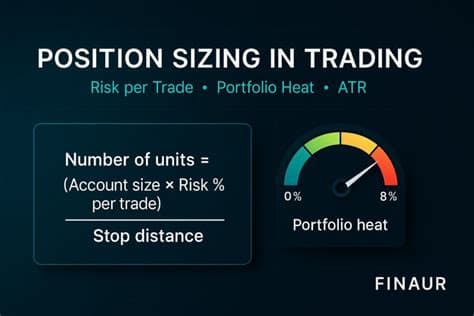
Once you have the stop distance, position size follows from your risk budget. If you risk 200 DKK per trade and the stop is 10 krona wide, you buy 20 shares. That is it.
200 DKK divided by 10 SEK per share equals 20 shares. The stock price does not enter the equation. A 20 SEK name and a 200 SEK name with the same krona stop get the same share count, assuming the same risk budget.
This matters for Nordic names because wide stops on expensive stocks mean small positions. A 40 krona stop on Novo Nordisk at 900 DKK with a 200 DKK risk budget is 5 shares. Five shares at 900 DKK is 4,500 DKK of capital committed, but only 200 DKK of risk. The capital might look large but the risk is small. Do not confuse the two.
When ATR Fails
ATR stops get run on earnings, news, and macro shocks. That is expected. A stop is a worst case exit, not a guarantee.
The real risk of ATR based stops is that traders set them and then ignore how ATR changes. A stock that spent three months ranging at 5 krona ATR can suddenly widen to 12 krona around earnings. If you placed a 2x ATR stop using last week's 5 krona number, you are now running a stop tighter than 1x. Update the ATR reading before every trade.
The scanner already incorporates ATR into its liquidity and position sizing filters. If the morning run flags a setup that passes the math, the stop width already accounts for the name's current range.